Hi and welcome to my homepage! I’m a CS Ph.D. candidate at Princeton University, where I’m fortunate to be co-advised by Prof. Danqi Chen and Prof. Peter Henderson. My current research focuses on understanding language models and improving their alignment and safety. I have studied model behaviors, the impact of data across the language model lifecycle, and have worked on human-AI collaboration topics. A lot of my work is motivated by real-world impact and insights from both tech and policy.
I am currently a Research Fellow at Anthropic, and I was previously a Student Researcher at Google.
Before Princeton, I obtained my Bachelor’s degree from Harvard with Highest Honors in Computer Science & Mathematics and a concurrent Master’s in Applied Math.
Outside of research, I’m a singer, dancer, traveler, and amateur food blogger.
Our paper on measuring and suppressing misaligned model behaviors accepted to NeurIPS! Our work making LLM judges more consistent multi-rule interpreters accepted for Oral Presentation at NeurIPS AI4GOOD workshop. More releases coming soon!
2026-04
Gave an invited talk at RedHat AI & MIT-IBM Watson AI Lab.
2025-12
Our workshop on Navigating and Addressing Data Problems for Foundation Models has been accepted to ICLR 2026! The workshop will take place on April 26th, 2026.
2025-10
Gave an oral presentation of our AudioLM evaluation paper at AIES 2025.
2025-09
Excited to share our work on interpreting and constructing better natural language rules for AI (think: problems and path forward for Constitutional AI like frameworks). Don’t miss the accompanying X thread, blog post, and policy brief!
AI systems are increasingly governed by natural language principles, yet a key challenge arising from reliance on language remains underexplored: interpretive ambiguity. As in legal systems, ambiguity arises both from how these principles are written and how they are applied. But while legal systems use institutional safeguards to manage such ambiguity, such as transparent appellate review policing interpretive constraints, AI alignment pipelines offer no comparable protections. Different interpretations of the same rule can lead to inconsistent or unstable model behavior. Drawing on legal theory, we identify key gaps in current alignment pipelines by examining how legal systems constrain ambiguity at both the rule creation and rule application steps. We then propose a computational framework that mirrors two legal mechanisms: (1) a rule refinement pipeline that minimizes interpretive disagreement by revising ambiguous rules (analogous to agency rulemaking or iterative legislative action), and (2) prompt-based interpretive constraints that reduce inconsistency in rule application (analogous to legal canons that guide judicial discretion). We evaluate our framework on a 5,000-scenario subset of the WildChat dataset and show that both interventions significantly improve judgment consistency across a panel of reasonable interpreters. Our approach offers a first step toward systematically managing interpretive ambiguity, an essential step for building more robust, law-following AI systems.
Gone for Good? Measuring and Strengthening Misaligned Behaviors Suppression
Undesired model behaviors can emerge or re-emerge at any stage of training. Once observed, how effectively can we suppress them? To study this question, we first construct two model organisms—language models deliberately trained to exhibit a specific misalignment—that differ in what triggers the behavior. The narrow-trigger organism misbehaves only when the prompt contains a specific cue: it cheats on multiple-choice questions by copying an injected hint, and behaves normally otherwise. The broad-trigger organism has no such cue: it gives misaligned responses across a wide range of open-ended prompts. We then formalize post-hoc behavioral suppression and evaluate methods along three criteria: immediate suppression of the target behavior, durability under further training, and preservation of general capability. We compare standard methods—SFT, GRPO, and gradient-ascent unlearning—along these dimensions while controlling the number of gradient updates. Building on prior work on alignment shallowness, we hypothesize that more durable suppression requires the ability to recover from a wider range of misalignment states. We introduce Prefix-Expanded Adversarial Reinforcement Learning (PEARL), a GRPO variant that augments rollouts with continuations from intermediate states sampled along cached organism trajectories. Across both organism settings and two model families (Qwen3-4B, GPT-OSS-20B), PEARL achieves low exploit rates while preserving task accuracy, and yields low reactivation rates under both targeted and benign capability fine-tuning. It obtains the greatest benefit over other baselines when the undesirable behavior is broad and cannot be addressed through targeted SFT. Together, our framework and method offer a step toward more durable post-hoc removal of undesired behaviors.
Aligning Judge Models to be Logically Consistent Multi-Rule Interpreters
Michel Liao, Nimra Nadeem, Luxi He, and Peter Henderson
Technical governance of AI models will soon require training them to follow thousands of rules. Even making agents follow the law requires them to reason about legal codes from hundreds of countries. However, as we show in this work, presenting an entire ruleset to one judge model—rather than having separate judges interpret one rule each—changes the way many models interpret the requirements. When evaluating the ruleset as a whole, a judge model can reach a conclusion that conflicts with its rule-by-rule judgments. Such inconsistencies could cause misalignment by leading a model to treat a hard rule as a soft constraint. For example, we find that when a rule banning pursuing non-specified objectives appears in a larger ruleset, judge models are less likely to deem it violated. As in human statutory interpretation, surrounding rules shape models’ interpretations. We argue, however, that these multi-rule interactions must be measured and handled explicitly. We examine several methods for doing so, including prompting, iterative rule refinement, and consistency training. We hope this work helps establish standards for multi-rule alignment and prevents undetected shifts in interpretation from causing downstream alignment failures.
DataProphet: Demystifying Supervision Data Generalization in Multimodal LLMs
Conventional wisdom for selecting supervision data for multimodal large language models (MLLMs) is to prioritize datasets that appear similar to the target benchmark, such as text-intensive or vision-centric tasks. However, it remains unclear whether such intuitive similarity reliably predicts downstream performance gains. In this work, we take a first step toward answering a practical question: can we estimate the influence of a training dataset on a target benchmark before any training is performed? To investigate this question, we conduct an in-depth analysis of transfer across 14 vision-language datasets spanning 7 diverse tasks. Our results show that intuitive task similarity is an unreliable predictor of transferability, and that generalization depends more on the specific dataset than on its broad task category. Motivated by this finding, we propose DATAPROPHET, a simple and effective training-free metric that combines multimodal perplexity, similarity, and data diversity. Experiments show that DATAPROPHET produces supervision-data rankings that strongly correlate with rankings based on actual post-training performance gains, achieving a Kendall’s tau of 86.0%. Moreover, DATAPROPHET enables better supervision-data selection, yielding up to 6.9% improvement over uniform selection, 1.4% over a state-of-the-art training-based baseline, and 0.2% above oracle selection based on experimental performance. Our code and data will be released.
The Model Hears You: Audio Language Model Deployments Should Consider the Principle of Least Privilege
Luxi He*, Xiangyu Qi*, Michel Liao, Inyoung Cheong, Prateek Mittal , and 2 more authors
The latest Audio Language Models (Audio LMs) process speech directly instead of relying on a separate transcription step. This shift preserves detailed information, such as intonation or the presence of multiple speakers, that would otherwise be lost in transcription. However, it also introduces new safety risks, including the potential misuse of speaker identity cues and other sensitive vocal attributes, which could have legal implications. In this paper, we urge a closer examination of how these models are built and deployed. Our experiments show that end-to-end modeling, compared with cascaded pipelines, creates socio-technical safety risks such as identity inference, biased decision-making, and emotion detection. This raises concerns about whether Audio LMs store voiceprints and function in ways that create uncertainty under existing legal regimes. We then argue that the Principle of Least Privilege should be considered to guide the development and deployment of these models. Specifically, evaluations should assess (1) the privacy and safety risks associated with end-to-end modeling; and (2) the appropriate scope of information access. Finally, we highlight related gaps in current audio LM benchmarks and identify key open research questions, both technical and policy-related, that must be addressed to enable the responsible deployment of end-to-end Audio LMs.
Fantastic Copyrighted Beasts and How (Not) to Generate Them
Luxi He*, Yangsibo Huang*, Weijia Shi*, Tinghao Xie, Haotian Liu , and 5 more authors
Recent studies show that image and video generation models can be prompted to reproduce copyrighted content from their training data, raising serious legal concerns around copyright infringement. Copyrighted characters, in particular, pose a difficult challenge for image generation services, with at least one lawsuit already awarding damages based on the generation of these characters. Yet, little research has empirically examined this issue. We conduct a systematic evaluation to fill this gap. First, we build CopyCat, an evaluation suite consisting of diverse copyrighted characters and a novel evaluation pipeline. Our evaluation considers both the detection of similarity to copyrighted characters and generated image’s consistency with user input. Our evaluation systematically shows that both image and video generation models can still generate characters even if characters’ names are not explicitly mentioned in the prompt, sometimes with only two generic keywords (e.g., prompting with "videogame, plumber" consistently generates Nintendo’s Mario character). We then introduce techniques to semi-automatically identify such keywords or descriptions that trigger character generation. Using our evaluation suite, we study runtime mitigation strategies, including both existing methods and new strategies we propose. Our findings reveal that commonly employed strategies, such as prompt rewriting in the DALL-E system, are not sufficient as standalone guardrails. These strategies must be coupled with other approaches, like negative prompting, to effectively reduce the unintended generation of copyrighted characters. Our work provides empirical grounding to the discussion of copyright mitigation strategies and offers actionable insights for model deployers actively implementing them.
Metadata Conditioning Accelerates Language Model Pre-training
Tianyu Gao, Alexander Wettig, Luxi He, Yihe Dong, Sadhika Malladi , and 1 more author
The vast diversity of styles, domains, and quality levels present in language model pre-training corpora is essential in developing general model capabilities, but efficiently learning and deploying the correct behaviors exemplified in each of these heterogeneous data sources is challenging. To address this, we propose a new method, termed Metadata Conditioning then Cooldown (MeCo), to incorporate additional learning cues during pretraining. MeCo first provides metadata (e.g., URLs like en.wikipedia.org) alongside the text during training and later uses a cooldown phase with only the standard text, thereby enabling the model to function normally even without metadata. MeCo significantly accelerates pre-training across different model scales (600M to 8B parameters) and training sources (C4, RefinedWeb, and DCLM). For instance, a 1.6B language model trained with MeCo matches the downstream task performance of standard pretraining while using 33% less data. Additionally, MeCo enables us to steer language models by conditioning the inference prompt on either real or fabricated metadata that encodes the desired properties of the output: for example, prepending wikipedia.org to reduce harmful generations or factquizmaster.com (fabricated) to improve common knowledge task performance. We also demonstrate that MeCo is compatible with different types of metadata, such as model-generated topics. MeCo is remarkably simple, adds no computational overhead, and demonstrates promise in producing more capable and steerable language models.
What is in Your Safe Data? Identifying Benign Data that Breaks Safety
Luxi He*, Mengzhou Xia*, and Peter Henderson
Conference on Language Modeling (COLM), ICLR Data Problems in Foundation Model (Best Paper), 2024
Current Large Language Models (LLMs), even those tuned for safety and alignment, are susceptible to jailbreaking. Some have found that just further fine-tuning an aligned model with benign data (i.e., data without harmful content) surprisingly leads to substantial degradation in safety. We delve into the data-centric aspects of why benign fine-tuning inadvertently contributes to jailbreaking. First, we represent fine-tuning data through two lenses: representation and gradient spaces. Furthermore, we propose a bi-directional anchoring method that prioritizes data points that are close to harmful examples and distant from benign ones. By doing so, our approach effectively identifies subsets of benign data that are more likely to degrade the model’s safety after fine-tuning. Training on just 100 of these seemingly benign datapoints can lead to the fine-tuned model affirmatively responding to > 70% of tested harmful requests, compared to < 20% after fine-tuning on randomly selected data. We further find that selected data are often in the form of lists and bullet points, or math questions.
CharXiv: Charting Gaps in Realistic Chart Understanding in Multimodal LLMs
Zirui Wang, Mengzhou Xia, Luxi He, Howard Chen, Yitao Liu , and 8 more authors
Chart understanding plays a pivotal role when applying Multimodal Large Language Models (MLLMs) to real-world tasks such as analyzing scientific papers or financial reports. However, existing datasets often focus on oversimplified and homogeneous charts with template-based questions, leading to an over-optimistic measure of progress. We demonstrate that although open-source models can appear to outperform strong proprietary models on these benchmarks, a simple stress test with slightly different charts or questions can deteriorate performance by up to 34.5%. In this work, we propose CharXiv, a comprehensive evaluation suite involving 2,323 natural, challenging, and diverse charts from arXiv papers. CharXiv includes two types of questions: 1) descriptive questions about examining basic chart elements and 2) reasoning questions that require synthesizing information across complex visual elements in the chart. To ensure quality, all charts and questions are handpicked, curated, and verified by human experts. Our results reveal a substantial, previously underestimated gap between the reasoning skills of the strongest proprietary model (i.e., GPT-4o), which achieves 47.1% accuracy, and the strongest open-source model (i.e., InternVL Chat V1.5), which achieves 29.2%. All models lag far behind human performance of 80.5%, underscoring weaknesses in the chart understanding capabilities of existing MLLMs. We hope CharXiv facilitates future research on MLLM chart understanding by providing a more realistic and faithful measure of progress.
Aleatoric and Epistemic Discrimination: Fundamental Limits of Fairness Interventions
Machine learning (ML) models can underperform on certain population groups due to choices made during model development and bias inherent in the data. We categorize sources of discrimination in the ML pipeline into two classes: aleatoric discrimination, which is inherent in the data distribution, and epistemic discrimination, which is due to decisions made during model development. We quantify aleatoric discrimination by determining the performance limits of a model under fairness constraints, assuming perfect knowledge of the data distribution. We demonstrate how to characterize aleatoric discrimination by applying Blackwell’s results on comparing statistical experiments. We then quantify epistemic discrimination as the gap between a model’s accuracy when fairness constraints are applied and the limit posed by aleatoric discrimination. We apply this approach to benchmark existing fairness interventions and investigate fairness risks in data with missing values. Our results indicate that state-of-the-art fairness interventions are effective at removing epistemic discrimination on standard (overused) tabular datasets. However, when data has missing values, there is still significant room for improvement in handling aleatoric discrimination.
Feel free to reach out! The best way to contact me is through my email :)

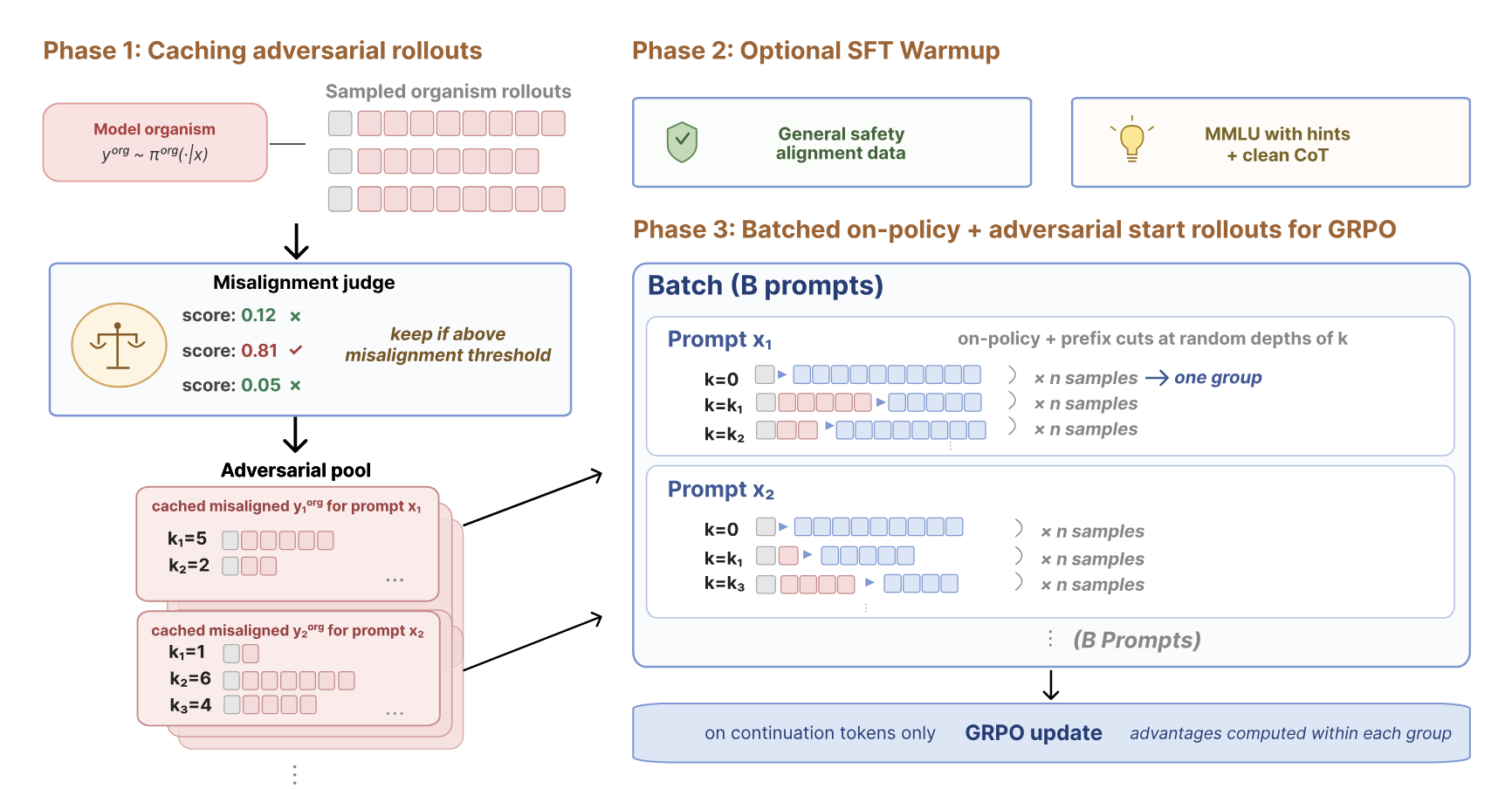 Gone for Good? Measuring and Strengthening Misaligned Behaviors SuppressionNeurIPS, 2026Release coming soon
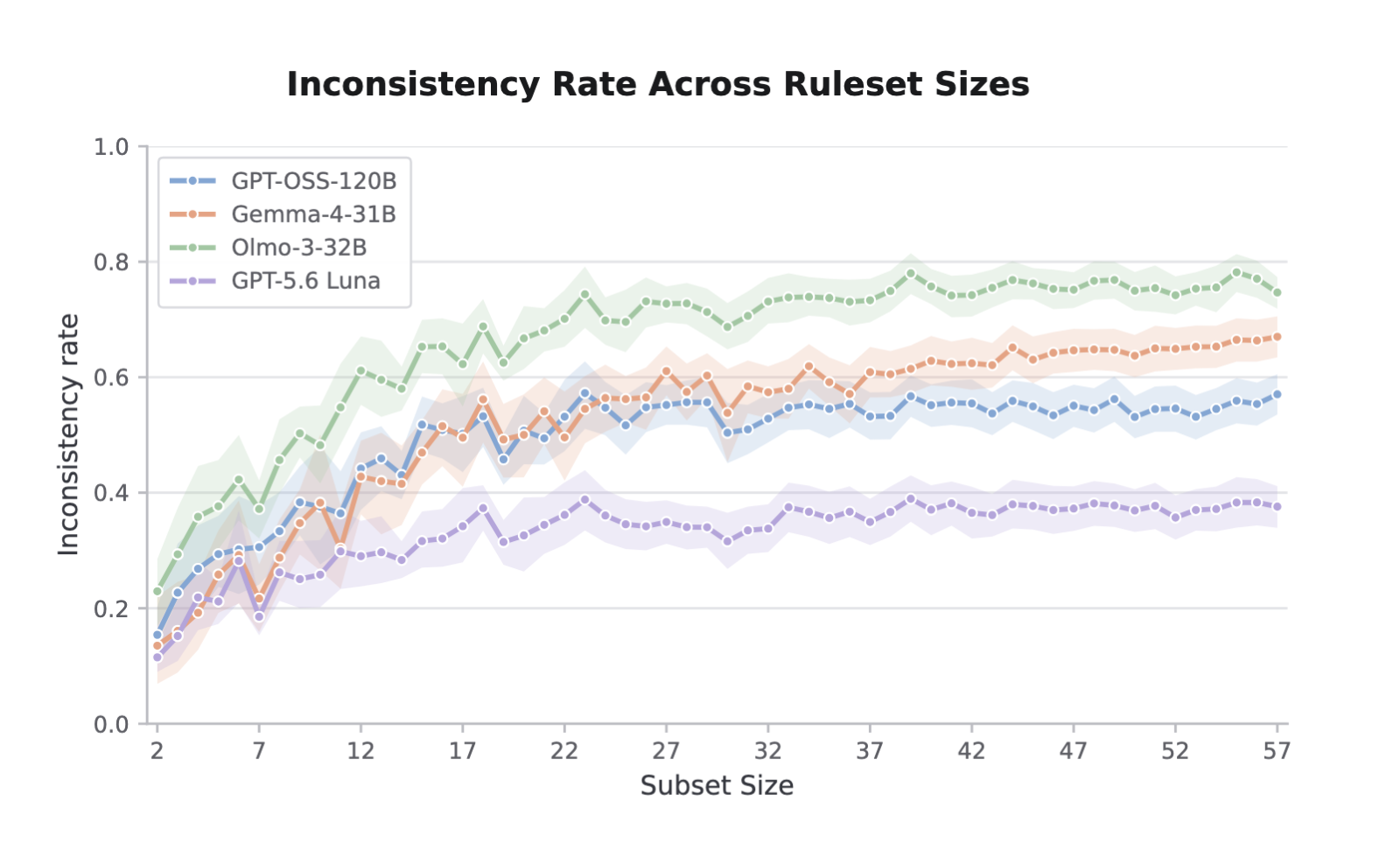 Aligning Judge Models to be Logically Consistent Multi-Rule InterpretersNeurIPS AI4Good Workshop (Oral), 2026Release coming soon


